
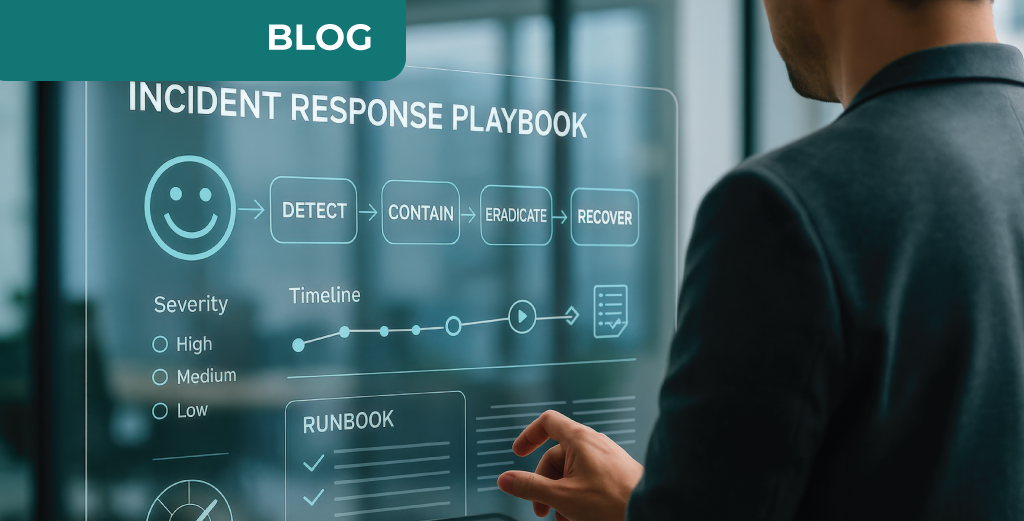
Discover how you can build cyber response playbooks for team-wide readiness and resilience. As digital systems become more interconnected across a Trust, a cyber incident in one school can rapidly affect others, making a coordinated, MAT-wide incident response more essential than ever.
The MAT ecosystem: Why a shared cyber playbook is crucial for rapid response
Many leaders focus on technical defences, but the most resilient MATs also invest in clear, practical playbooks and regular training so staff across every school, not just your systems, are prepared to respond confidently and consistently.
Building a MAT Incident Response Playbook should start with key scenarios such as:
- Data loss
- Ransomware
- Social engineering, Phishing and User Account compromise
- Compromise of third-party EdTech platforms
For each of the above, it's important to outline early identification signals and the first steps a staff member should take:
- Prioritise actions that can limit severity (disconnecting a machine, changing passwords, preserving logs, or notifying IT support). But...
- ... Emphasise that quick reporting is always valued over self-fixing attempts.
- Include guidance for when and how to escalate incidents, and whom to notify at the Trust level. Regularly update this document, drawing on sector best practices.
- It is also a good idea to split the playbook into two parts:
- One part, that is for general consumption, that instructs all players about their first (and maybe only steps) in an incident.
- And a second for-the-experts part that contains a lot of detail about your investigations, response, data collection, analysis, remediation, recovery, documentation, communication strategy (ICO, NCSC, stakeholders, 3rd party incident response support) and more.
💡 Did you know, Trusts that train staff using practical, sector-relevant resources enjoy faster recovery and fewer long-term impacts?
💡 Remember to keep paper printouts of your response plan and contact details of your response team. Depending on the nature of the incident, you may loose access to your digital file repository.
MAT wide collaboration: Defining roles, responsibilities, and instant communication channels
Schools across a MAT face distinct challenges; geographically distributed teams, diverse levels of technical expertise, and the cascading nature of incidents across several sites. Joint planning is the answer, you should develop a playbook that brings together DPOs, IT leads, headteachers, and safeguarding staff across schools. Start by:
- Defining key roles and response teams, such as ‘Incident Commander’, ‘Communications Lead’, ‘IT First Responder’, 'DPO' and 'CEO' with contact information and responsibilities outlined for each team and site. If you use 3rd parties for your incident response, make sure you have contact details for them on hand too.
- Establish secure incident communication channels such as MS Teams, ensuring escalation paths are clearly mapped (e.g., from a classroom ICT issue to Trust level intervention).
- Use templates, or even better cloud-based platforms such as GDPRiS for holding initial incident summaries, statements and a work log so communications with staff, parents, and external agencies are prompt and consistent.
- Schedule periodic whole-trust exercises: tabletop simulations prepping staff for data loss, ransomware, or phishing, including scenarios unique to your Trust's ecosystem.
💡 A successful cyber response strategy relies on clear communication, delineation of duties, and speed. Are you confident you have these covered?
MAT wide resilience: Strengthening supply chain, communication, and continuous learning post-incident
Trusts should mandate a full post-incident report that audits not just individual school responses but identifies patterns across the whole Trust. This process should include:
- Review vulnerabilities in the network or in the supply chain, examining EdTech and cloud service providers for compliance with expected security controls.
- Sharing outcomes and root causes Trust-wide to inform continuous improvement.
- Updating playbooks regularly and reviewing them with all teams, not just IT.
- Proactive incident communication, like newsletter bulletins or debriefs at Trust leadership meetings, helps build buy-in and a sense of collective responsibility for cyber health.
- Going further by providing ongoing CPD, integrating cyber resilience modules into staff onboarding, and using real-world lessons to shape annual policy reviews.
💡 After an incident, the real test lies in review and long-term adaptation - do you have systems in place to help with this?
Empowering Schools and Trusts to take control of Data Protection and Cyber Security with Confidence and Clarity
GDPRiS is a platform built specifically for the education sector, combining intuitive compliance tools, real-time risk insights, and CPD-aligned training to help schools and MATs meet their legal obligations without the complexity. From managing Breaches and Cyber Security Incidents to engaging staff in meaningful data protection and cyber security practices, GDPRiS turns compliance into a culture - saving time, reducing risk, and building trust across your community.
Ready to to take control of data protection and cyber security? Book a meeting with our team today!
Further resources
Risk Protection Arrangement Cyber Response Plan (template)
A Practical Guide for Schools Cyber Incident Response