
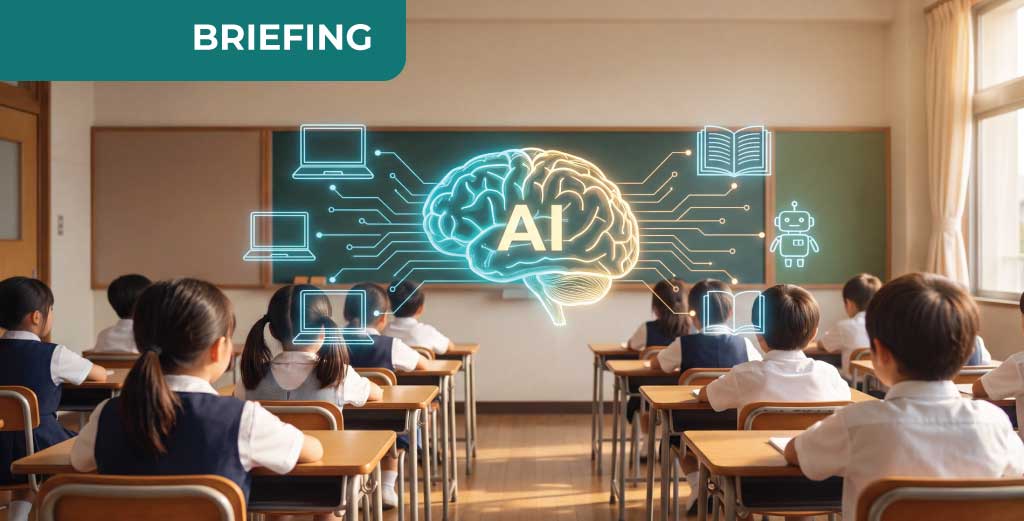
AI is already impacting pupils whether they actively use AI tools or not. It is increasingly shaping teaching and learning, safeguarding, pupil data management, online safety, educational software, attendance analytics, behaviour systems and wider public services affecting children.
Leadership Briefing for MATs
The Artificial Intelligence and Children’s Rights review concludes that current safeguards are not keeping pace with AI adoption and that organisations working with children should move from reactive compliance to proactive governance.
Key risks
1. Safeguarding risks are evolving rapidly
Generative AI has increased the risk of:
• Deepfake and "nudification" imagery involving pupils.
• AI-assisted cyberbullying.
• Online grooming and exploitation.
• Harmful interactions with AI chatbots and companion systems.
Board question: Are safeguarding policies and DSL training up to date for AI-enabled harms?
2. Pupil data protection is becoming more complex
Many educational technologies collect significant amounts of pupil data, often sharing information with third parties. The report highlights concerns that children's data may be used for commercial purposes and AI model training without meaningful understanding from schools, parents or pupils.
Board question: Do we know exactly what pupil data our AI-enabled suppliers collect, store and use?
3. AI tools are entering classrooms before governance frameworks
Research cited in the report found examples of AI products being used in educational settings without suitable child rights assessments, transparency, risk reviews or consultation with pupils.
Board question: Does the trust have an approved AI governance framework and procurement process?
4. Bias and discrimination risks may affect vulnerable learners
AI systems can reinforce existing inequalities through biased outputs linked to ethnicity, disability, language, gender or socioeconomic factors. These effects may be amplified where AI influences assessment, intervention or support decisions.
Board question: How are equality impact assessments incorporated into AI procurement and use?
5. AI literacy is now a safeguarding issue
The report argues that pupils need more than technical AI skills. They require understanding of:
• Deepfakes and misinformation.
• Privacy and personal data.
• Bias and manipulation.
• Critical thinking and digital resilience.
Board question: Is AI literacy embedded within digital citizenship, safeguarding and curriculum planning?
Leadership Takeaway
The report's central message is clear: AI governance should not be treated solely as an IT issue. For schools and trusts, it is simultaneously a safeguarding, governance, equality, data protection and educational leadership issue requiring board-level oversight. Trusts that establish clear governance, transparency and child-centred decision-making now will be better positioned to protect pupils while realising the educational benefits of AI.
If you haven't already contributed to our anonymous AI Governance in MATs 2026 Benchmark survey please take some time to share your insights.